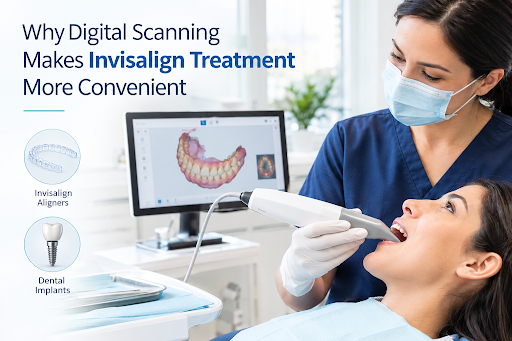
Dental treatment has become increasingly digital, changing how dentists assess, plan, and monitor different procedures. One of the technologies making this possible is the TRIOS intraoral scanner, which allows dentists to create detailed digital images of the mouth without relying on traditional physical impressions.
Digital scanning can be especially useful when planning treatments such as Invisalign aligners and dental implants. Instead of working only with conventional impressions, a digital workflow can help the dental team view the teeth and surrounding structures in a more convenient format. For patients, this can make consultations easier to understand and treatment planning more straightforward.
The shift towards digital dentistry is also changing the overall patient experience. With a fully digital workflow and a Trios intraoral scanner, patients can see how their treatment is being planned while the dental team can use digital information as part of the assessment process.
What Is Digital Dental Scanning?
Digital dental scanning uses an intraoral scanner to capture images of the teeth and oral structures. The scanner creates a digital representation that can be viewed on a screen and used during treatment planning.
For patients considering clear aligners, this can be particularly useful because teeth alignment can be assessed digitally. The digital information can also support the creation of a treatment plan based on the individual’s existing tooth position and alignment needs.
Unlike traditional impression materials, an intraoral scanner does not require the patient to have impression material placed in the mouth. This can make the scanning stage feel simpler and more comfortable for many patients.
A More Convenient Approach to Invisalign Planning
Invisalign treatment involves a series of clear aligners that gradually move the teeth towards their planned positions. Proper assessment and treatment planning are important before starting the aligner process.
Digital scanning can make this stage more convenient by providing a digital view of the teeth. Advanced 3D imaging can also be used to preview a treatment plan and show projected results, helping patients understand the proposed approach more clearly.
For patients who are concerned about the appearance of traditional braces, Invisalign and other invisible braces provide a discreet alternative. The aligners are removable for eating and brushing, while the treatment is planned according to the patient’s individual alignment needs.
How Digital Scanning Can Improve the Patient Experience
A major advantage of digital dentistry is that it can make information easier to view and discuss. Instead of relying entirely on verbal explanations, patients can see digital images of their teeth during the consultation.
Some practical benefits include:
- A digital view of the teeth: The dental team can examine the scanned images as part of treatment planning.
- Easy visual communication: Patients can better understand their current alignment and the proposed treatment approach.
- Greater convenience: Digital scanning avoids the use of conventional impression material during the scanning stage.
- Treatment planning: Digital images can support planning for aligner-based teeth straightening.
- Progress discussions: Digital information can be useful when discussing treatment progress during follow-up appointments.
These advantages can make the consultation process more interactive and easier to understand.
Digital Technology and Dental Implants
Digital dentistry is not limited to Invisalign. It can also play an important role when patients are being assessed for dental implants.
Dental implants are used to replace missing teeth and can provide both functional and aesthetic benefits. Implant treatment requires careful assessment because the dentist needs to consider the patient’s individual oral condition and the planned restoration.
Digital records can form part of the information used during this planning process. When combined with other appropriate diagnostic methods, digital technology can help the dental team develop a treatment approach suited to the patient’s needs.
This is particularly relevant for patients who require replacement of one or more missing teeth. Depending on the individual situation, treatment options may include dental implants, dentures, or other restorative solutions.
Why Digital Scanning Matters for Clear Aligners
The convenience of digital scanning becomes especially noticeable when discussing clear aligner treatment. Patients can view their teeth digitally and discuss their alignment concerns with the dental team before deciding on a treatment approach.
At this stage, a TRIOS intraoral scanner can support the digital workflow by creating a detailed scan of the patient’s teeth. This information can be used alongside the dentist’s clinical assessment when planning aligner treatment.
Clear aligners are designed to be worn for specific periods before moving to the next set in the treatment series. Regular dental appointments are also important for monitoring progress and making sure the treatment continues according to the planned approach.
What Patients Can Expect During a Digital Scan
The scanning process is designed to capture the teeth digitally using a handheld intraoral scanner. The dentist or dental professional moves the scanner around the mouth while images are captured and combined to create a digital model.
Patients can generally expect:
- An initial dental assessment to understand their concerns and treatment requirements.
- Digital scanning to capture the teeth and create a digital record.
- Treatment planning based on the patient’s dental condition and goals.
- A discussion of treatment options so the patient can understand what is suitable for their needs.
- Ongoing appointments where required to monitor treatment progress.
This approach can be useful for both patients considering Invisalign aligners and those exploring restorative treatment such as dental implants.
Invisalign and a Fully Digital Dental Experience
The move towards digital dentistry is ultimately about making dental care more efficient and easier for patients to understand. For Invisalign treatment, digital scanning can provide a clear starting point for assessing tooth alignment and discussing the proposed treatment plan.
For dental implants, digital records can similarly form part of a broader diagnostic and planning process. The technology itself does not replace professional clinical assessment, but it can support the dentist by making dental information easier to capture, view, and discuss.
A fully digital approach can therefore be particularly helpful for patients who want a more visual and convenient experience when exploring modern dental treatments. With a Trios intraoral scanner and certification as an Invisalign provider, patients can discuss clear aligner treatment within a digital workflow while also having access to implant and other dental treatments under the same practice.
Making Modern Dental Treatment Easier to Understand
Digital dentistry has changed more than just the technology used inside a dental clinic. It has also changed how patients can participate in discussions about their treatment. Seeing digital images of their teeth can make it easier for patients to understand alignment concerns, replacement options for missing teeth, and the different stages involved in treatment.
For Invisalign patients, this can make the process of exploring clear aligners more convenient. For patients considering dental implants, digital information can support the assessment and planning process. In both cases, the goal is to combine appropriate technology with professional dental evaluation and individualized care.
A Clearer Path to Better-Informed Dental Decisions
For patients looking for a modern approach to Invisalign aligners and dental implants, digital technology can make consultations more convenient and treatment discussions more visual. The TRIOS intraoral scanner supports this fully digital approach, helping make dental information easier to capture and discuss as part of personalized treatment planning. With its focus on digital dentistry, Invisalign treatment, and implant care, Splendid Smiles Dental Clinic is the best option to opt for when seeking a modern and patient-focused dental experience.